Separate product price from deployment readiness
A robot price or access fee is only one part of the amount required to use a system responsibly. Deployment readiness covers changes, labor, services, and safeguards needed before an approved task begins. Homebot One's public pages do not provide a universal KOKO site-readiness budget, so request requirements for the current version and intended program. Treat every unconfirmed item as an assumption rather than adding a generic robot specification.
Define the deployment boundary: household, rooms, users, routine, dates, hours, supervision, and support path. A demo, research study, developer prototype, and longer home evaluation can require different preparation. Create one ledger for required work, optional improvements, recurring operations, and contingency. If the reader searched for Coco or Co Co, verify that the plan concerns Homebot One KOKO before assigning a requirement or cost.
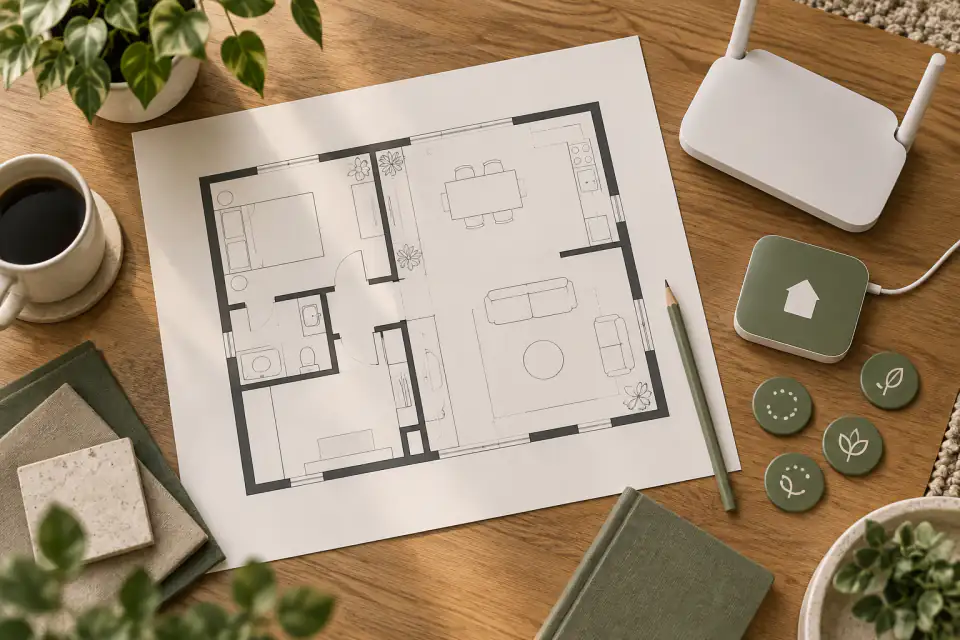
Survey the physical environment
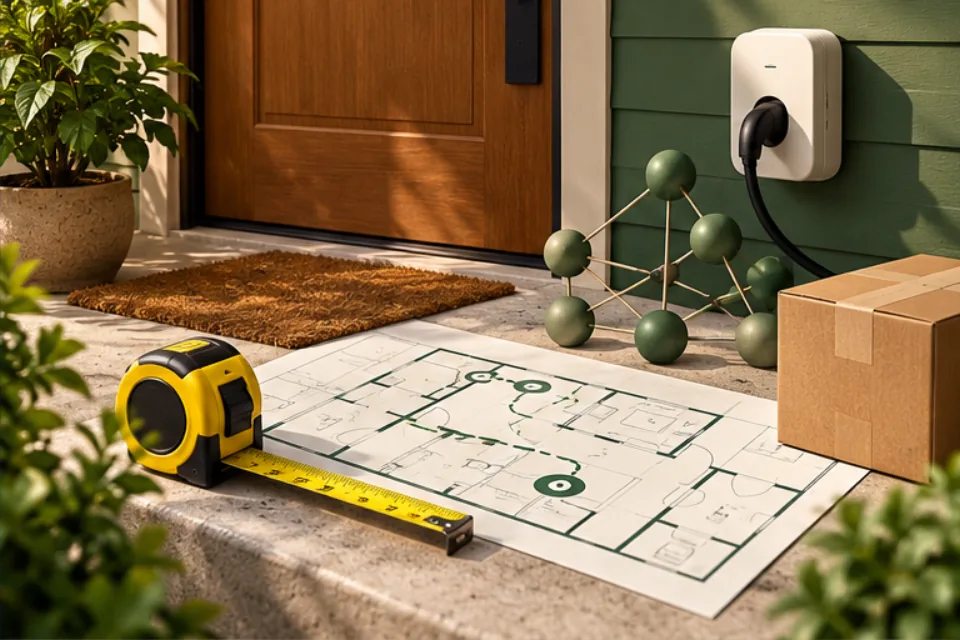
Map the approved route and measure clearances, surfaces, thresholds, slopes, doors, turns, stairs, clutter, cables, fragile items, pet areas, child activity, sunlight, and other conditions relevant to the task. Ask Homebot One which measurements and operating limits apply instead of estimating from photos. Include the charging or home position, access to power, ventilation, safe storage, delivery path, unpacking, packaging removal, and any landlord or facility permission.
Price only changes supported by evidence. A small furniture move may cost nothing; electrical work, network cabling, a secure storage area, or professional installation may require a quote. Preserve a safe path for people and the previous way of completing the routine. Record which changes are temporary, who restores them, and what happens if KOKO cannot use the route consistently under ordinary household conditions.
- Route measurements, surfaces, thresholds, stairs, and exclusion areas
- Power and charging position confirmed for the current setup
- Delivery, storage, unpacking, and return logistics
- Reversible changes and the cost of restoring the space
Budget connectivity, accounts, privacy, and security
Ask which current functions require internet access, local network access, a phone, an account, a subscription, or another service. Document bandwidth, supported security settings, update process, authentication, administrator roles, logs, and behavior during an outage. Do not assume offline operation or permanent cloud dependence. Price any network upgrade, separate network, managed device, security review, or ongoing service only after the need is confirmed.
Create a data inventory before setup: people, rooms, sensor inputs, accounts, maps, commands, support logs, storage, transmission, retention, access, export, and deletion. Assign time for consent, notices, account administration, security configuration, and end-of-use cleanup. NIST consumer IoT guidance and CISA procurement guidance can organize questions, but neither source verifies KOKO's current design; product-specific answers must come from current documentation or the responsible team.
Plan people, procedures, and support
Deployment work includes onboarding, practice, household rules, accessibility accommodations, supervision, routine preparation, charging, cleaning, troubleshooting, incident handling, updates, and communication with support. Estimate each person's setup and recurring time at an honest rate, even when family members are not paid. Name an operator, account administrator, safety lead, data contact, support contact, and person with authority to pause use.
Run a tabletop review before live use. Walk through a failed command, blocked route, network outage, unexpected movement, inaccessible stop, privacy complaint, guest arrival, pet reaction, low-power condition, and unavailable support. Confirm who acts and how the old routine continues. A procedure that exists only in one person's memory creates hidden dependency and cost, so write short instructions that other approved users can follow.
Pass a readiness gate before committing the full budget
Create a readiness table with requirement, evidence, owner, one-time cost, recurring cost, deadline, status, and fallback. Add a contingency range for confirmed uncertainties without disguising it as a quoted KOKO fee. The gate should verify that critical physical, technical, consent, safety, accessibility, support, and recovery conditions are complete. Open items that affect safe operation or informed participation should block deployment rather than become tasks for after launch.
The final decision compares complete deployment cost with verified value for the bounded task. Searches such as 'the price is right home robot KOKO Coco' express a reasonable concern, but the answer comes from this site-specific evidence and current written terms, not from the phrase itself. Approve a smaller reversible scope when evidence is incomplete, keep reserve for exit or restoration, and review readiness again after material changes.
- Required conditions supported by dated evidence
- One-time, recurring, contingent, and exit costs separated
- Fallback process tested for failures and service interruptions
- Named approver and a new review after version or scope changes
Frequently asked questions
Are KOKO deployment costs included in the robot price?
Do not assume they are. Ask for current written terms and separately estimate site preparation, delivery, setup, connectivity, training, human labor, support, recurring services, contingency, and exit.
What should block a KOKO deployment?
Unresolved conditions that affect safe use, consent, accessibility, data handling, reliable recovery, or essential support should remain visible and may justify delaying or narrowing the deployment.
Do I need to upgrade my Wi-Fi for KOKO?
That cannot be inferred generically. Ask Homebot One for current connectivity requirements for the intended functions, then test the approved route and price only the changes the evidence supports.
How much contingency should I add?
Use a documented range tied to specific uncertainties rather than an arbitrary percentage. Keep contingency separate from quoted fees and identify who may authorize its use.
Sources & further reading
From Homebot One, the team building KOKO in Fremont, California.