Treat stairs as a boundary until product-specific guidance says otherwise
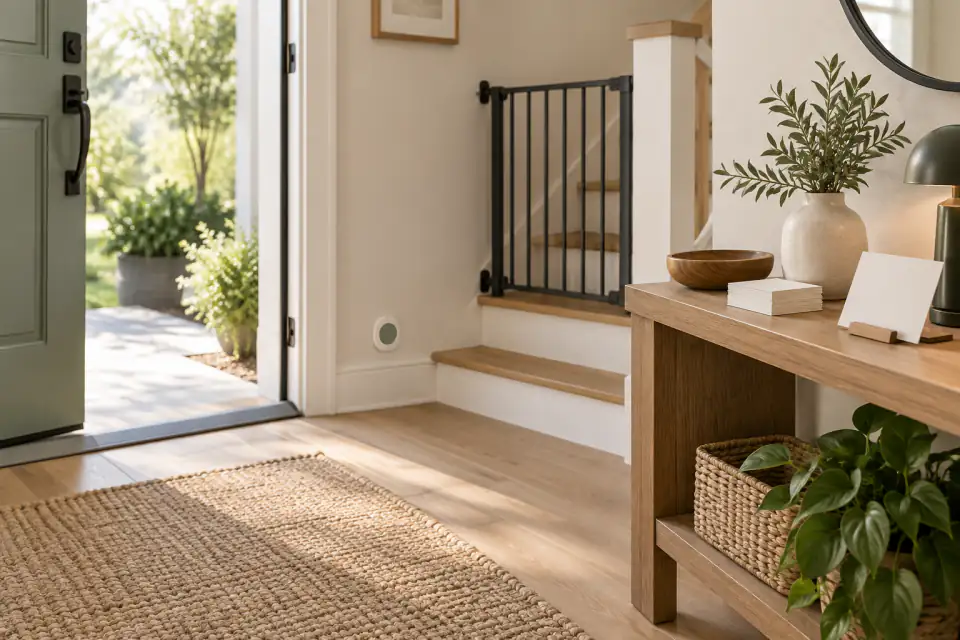
Treat every staircase, step, landing edge, and level change as an excluded boundary unless Homebot One gives current, build-specific instructions and demonstrates an approved use. A home robot’s ability to move across a level floor does not establish stair capability. Marketing language about home mobility or an image near a staircase is not evidence that the system may climb, descend, or detect every edge.
Begin a multi-level evaluation on one selected floor with a route that stays well away from stairs. Ask how the route-test unit identifies restricted areas, what physical or configured safeguards are supported, and what the operator must inspect before each session. Keep a person responsible for the route and stop the activity if a boundary cannot be maintained.
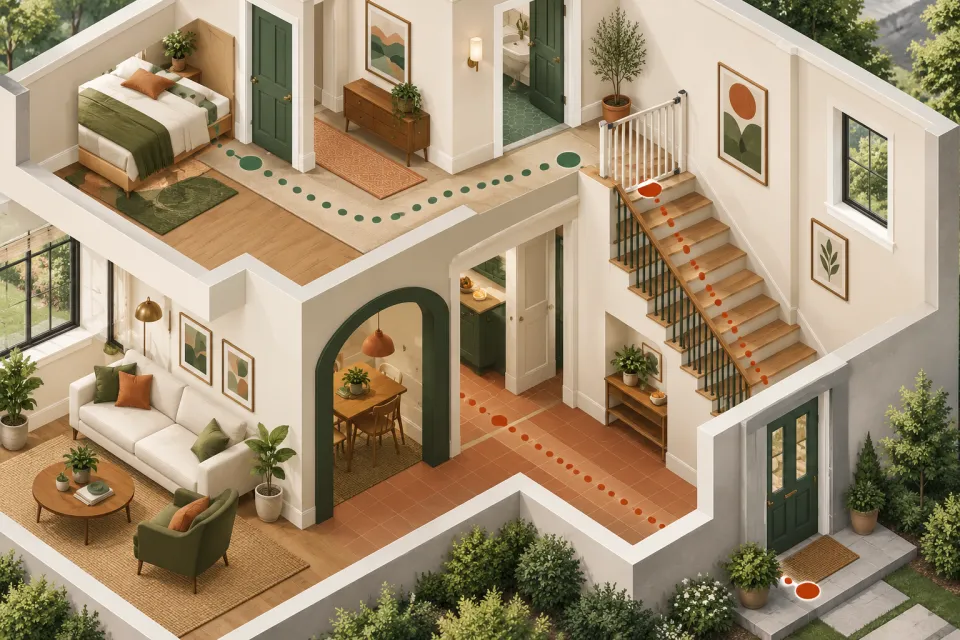
Create a separate route plan for each floor
Map each level independently. Mark stair openings, individual steps, sunken rooms, balconies, ramps, thresholds, floor transitions, and doors that can expose a drop. Identify where people, pets, and objects commonly cross the route. Ask which mapping or boundary tools exist for the current KOKO program and what their documented limits are.
A configured boundary should not be your only layer of protection without manufacturer support for that use. Discuss physical access control and supervision with Homebot One, especially near an open stair. Do not invent barriers that could create another hazard, block an exit, interfere with accessibility, or conflict with the system’s sensors.
- Label every stair, step, drop, balcony, and change in floor height.
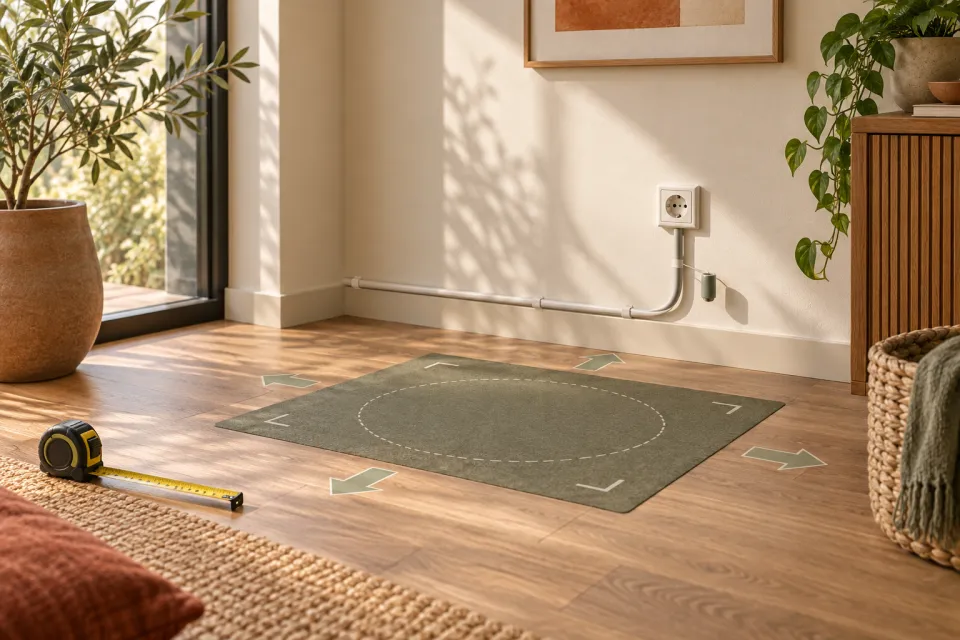
- Choose a starting zone with generous separation from level boundaries.
- Confirm which route controls are supported for the exact build.
- Inspect the route before every session rather than relying on an old map.
Ask how movement between levels is supposed to work
If you want to evaluate KOKO on more than one level, ask whether the current program supports that arrangement. Questions include whether separate maps or home positions are needed, how the active level is identified, whether the system can be powered down for relocation, and who is authorized to handle it. Do not lift, carry, roll, tilt, or place the robot on stairs without current written instructions.
Manual relocation can introduce weight, grip, pinch, battery, calibration, and restart questions even when the robot never operates on the stairs. Ask for the exact handling procedure, required people or equipment, acceptable orientation, and post-move checks. If there is no approved process, keep the evaluation on one level.
Test stopping and recovery far from a stair boundary
Learn the normal pause and stop controls in a clear area before any route evaluation. Ask what the route-test unit does when a path is blocked, a map is uncertain, a door changes position, or connectivity is interrupted. Practice only approved recovery steps and keep the test far enough from level changes that an unexpected motion cannot create a stair event.
Do not perform adversarial edge tests in a home to see whether detection works. UL’s robot-safety overview illustrates why movement, functional safety, batteries, charging, electromagnetic compatibility, wireless functions, and cybersecurity are system-level questions. Product-specific engineering validation belongs in an appropriate controlled environment with the responsible team, not beside a household staircase.
- Verify the normal stop control before starting the route.
- Keep recovery practice in a clear, level, approved area.
- End the session when a boundary, map, or operator state is uncertain.
- Report route concerns to Homebot One instead of improvising a fix.
Decide whether a one-level use case is enough
A multi-level home does not require a multi-level robot routine. The best initial use case may stay within a kitchen-living area, an office floor, or another single level where the route and supervision are simple. Evaluate whether that bounded outcome is useful before adding relocation, separate maps, or more home positions.
If the value depends on reaching every floor, leave that requirement explicit and unresolved until Homebot One provides current evidence and a supported plan. Compare the extra setup, supervision, and recovery burden with a fixed device or separate routine on the other level. A narrower reliable process can be more useful than an ambitious route with important unknowns.
Frequently asked questions
Can KOKO climb stairs?
Never presume that it can. Check with Homebot One about the exact route-test unit and treat stairs and level changes as excluded boundaries unless current product-specific guidance explicitly states otherwise.
Can I carry KOKO to another floor?
Only follow current Homebot One handling instructions. Ask about weight, grip points, orientation, power state, required people or equipment, and checks after relocation. If no approved procedure is provided, do not move it between floors.
Is a configured no-go zone enough near stairs?
Never presume a configured boundary alone is sufficient. Have the Homebot One team explain what safeguards and supervision are required for the route-test unit and environment.
How should I begin a KOKO evaluation in a multi-level home?
Choose one clear, level area away from stairs, map an approved short route, verify pause and stop controls, and keep the session supervised.
Sources & further reading
From Homebot One, the team building KOKO in Fremont, California.