The phrase has at least three different intents
“ABS robot” does not identify one product by itself. It may mean a robot that uses acrylonitrile-butadiene-styrene plastic, a product or company that someone remembers by the initials ABS, or an incomplete query copied from a caption, specification, or video. Resolve the intent before selecting a search result.
Capitalization alone does not solve the problem. Technical documents often capitalize material abbreviations, while brands and model codes also use capital letters. Look at the words around ABS, the publisher, and whether the result provides a manufacturer or material grade.
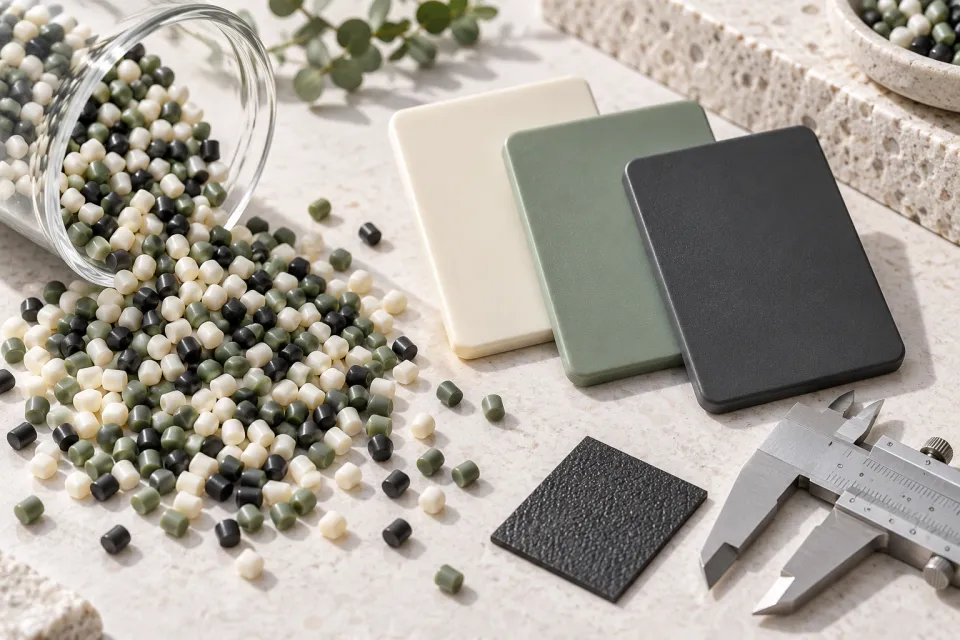
Intent one: ABS is a family of plastic materials
ASTM D4673-23 uses ABS for acrylonitrile-butadiene-styrene plastics and alloys intended for molding and extrusion. The standard organizes materials into groups, classes, and grades. That means “made with ABS” is a category statement, not a complete mechanical, thermal, chemical, or fire-safety specification.
If a page discusses housings, panels, molded parts, pellets, injection molding, impact tests, softening temperature, or a resin grade, the material intent is likely. Ask for the exact grade, additives, part thickness, manufacturing process, and tests for the finished application.
Intent two: ABS is being treated as a name
A headline, marketplace listing, or spoken clip may use ABS as initials for an alleged maker, robot, program, or model. Do not assume that such a proper name exists because several pages repeat it. Search for an official domain, legal company name, model page, support information, and a consistent product identifier.
Then check whether the source is describing the manufacturer, the robot, a component supplier, or a reseller category. A page can mention ABS plastic in the same sentence as a different robot brand, causing search engines to combine terms that were never a product name.
Intent three: the query is incomplete or distorted
Voice transcription, automatic captions, OCR, and copied snippets can drop words or confuse abbreviations. The original phrase may have been “ABS plastic robot shell,” a longer model code, or text belonging to a separate item on the page. Return to the full sentence and original source before expanding the abbreviation.
Add one verified context term at a time: material, enclosure, manufacturer, model, video, event, or document title. Avoid adding KOKO, Homebot One, or another brand simply because it appears nearby in search results.
- Material query: add grade, housing, enclosure, molding, or flammability.
- Product query: add official, manufacturer, model, support, or manual.
- Media query: add the exact program, event, uploader, date, or quoted phrase.
- Document query: search the complete sentence and inspect the specification heading.
Do not use ABS to make an unsupported KOKO claim
The public Homebot One, KOKO Home, and KOKO Developer pages reviewed on September 30, 2026 did not identify ABS as a KOKO material or use ABS as a KOKO model name. A photo or rendering cannot establish polymer chemistry, grade, additives, or construction.
For a dated answer, say that KOKO’s public material specification is not stated and ask Homebot One for the current bill-of-materials disclosure or enclosure specification appropriate to the inquiry. Do not convert a general article about ABS into a product fact.
Frequently asked questions
What does ABS stand for in plastics?
ABS stands for acrylonitrile-butadiene-styrene, a family of plastic materials and alloys covered by classifications such as ASTM D4673.
Is ABS Robot one specific brand?
The phrase alone does not establish a brand. Verify an official manufacturer, domain, product page, and model identifier before treating ABS as a proper name.
Does KOKO use ABS plastic?
The official KOKO pages reviewed on September 30, 2026 did not publish an ABS material specification. Ask Homebot One for current material information.
Is every ABS plastic the same?
No. ABS materials vary by grade, composition, additives, reinforcement, processing, and tested properties.
Sources & further reading
From Homebot One, the team building KOKO in Fremont, California.