Start with the exact occurrence of “ABS”
Treat “ABS Robot” as an unresolved entity until you can point to the page, field, sentence, or spoken line where it appeared. Save the URL, publisher, date, nearby heading, and a few words before and after ABS. This record is more useful than searching the two words in isolation.
The first pass is documentary: determine whether ABS appears in a brand field, model field, materials table, seller title, caption, transcript, or unrelated recommendation block. Search engines can join words from different page regions, so the visible snippet may not preserve that distinction.
Pass one: classify the field, not the capitalization
A manufacturer or brand field proposes an organization. A model or SKU field proposes a product identifier. A materials field proposes acrylonitrile-butadiene-styrene or another defined abbreviation. Copy the label of the field along with its value; capital letters alone cannot choose among those possibilities.
If the term came from audio, inspect the transcript around it and listen again. Automatic captions can turn a longer model code, company name, or phrase such as “ABS enclosure” into the shorter expression “ABS robot.”
- Brand field: record the claimed legal or trading name and the page owner.
- Model field: record the manufacturer, model family, version, and support path.
- Material field: record the component, grade, thickness, standard, and test context.
- Caption or snippet: return to the original page before classifying the term.
Pass two: resolve an alleged company or model
For a company claim, look for an official domain, consistent organization name, contact and policy pages, product documentation, and independent primary records that point back to the same entity. A marketplace seller, channel handle, or category label is not enough to establish the manufacturer.
For a model claim, trace the identifier through the maker’s product hierarchy. A stable model normally appears on a product page, manual, support record, version note, or compatible-accessory list. If the trail exists only in copied seller titles, mark the entity unresolved rather than inventing a brand.
Pass three: test the material interpretation
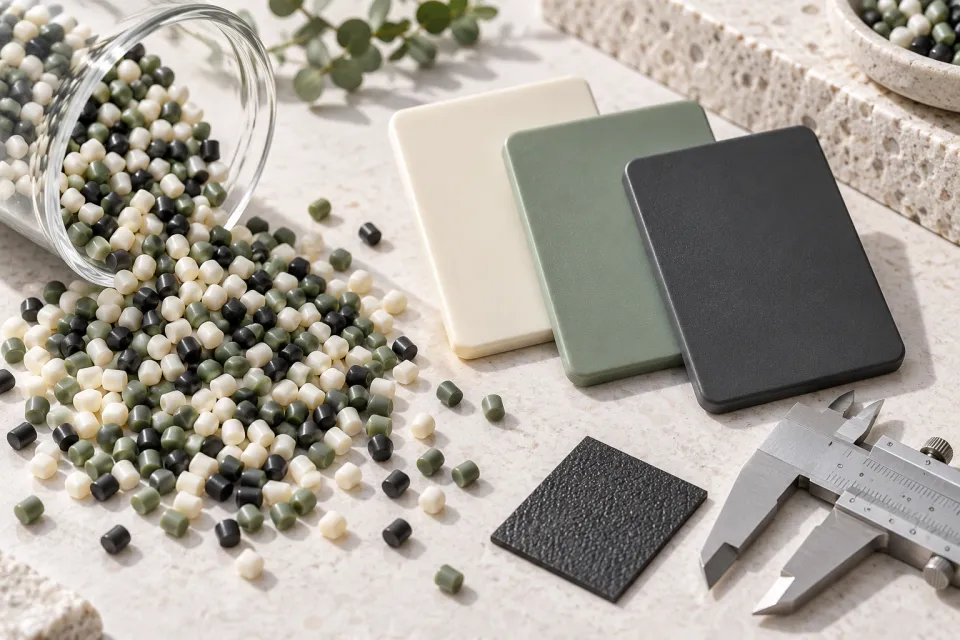
ASTM D4673-23 uses ABS for acrylonitrile-butadiene-styrene plastics and alloys for molding and extrusion. A source discussing resin grades, molded housings, specimen properties, fillers, reinforcement, or a materials field is describing a material family rather than naming the robot.
Even a valid ABS material entry should be tied to a specific part and grade. It does not establish that an entire robot uses ABS, that the material has a particular flammability rating, or that the finished product passed a robot safety standard.
Worked result: keep ABS separate from KOKO
Applying the method to the official Homebot One and KOKO pages reviewed September 30, 2026 produces a clear result: Homebot One is the company, KOKO is the robot name, and the pages do not use “ABS Robot” as a brand or model. They also do not publish an ABS material specification for KOKO.
The correct record is therefore “no official KOKO connection established,” with the review date and URLs attached. A later part-specific material declaration could answer an ABS materials question without turning ABS into an alternate KOKO name.
Frequently asked questions
What should I save before researching “ABS Robot”?
Save the original URL, publisher, date, field label or surrounding sentence, and whether the term came from a page, seller title, caption, or transcript.
How do I verify ABS as a company or brand?
Resolve a consistent organization identity, official domain, product documentation, support path, and primary records. A seller name or channel handle alone is insufficient.
How do I verify ABS as a model?
Find the identifier in the manufacturer’s own product hierarchy, such as a product page, manual, support record, version note, or compatible-accessory list.
What did the method find for KOKO?
The official Homebot One pages reviewed September 30, 2026 use Homebot One as the company and KOKO as the robot name; they do not present ABS as a KOKO brand, model, or published material specification.
Sources & further reading
From Homebot One, the team building KOKO in Fremont, California.