Use the current source and hardware when choosing the label
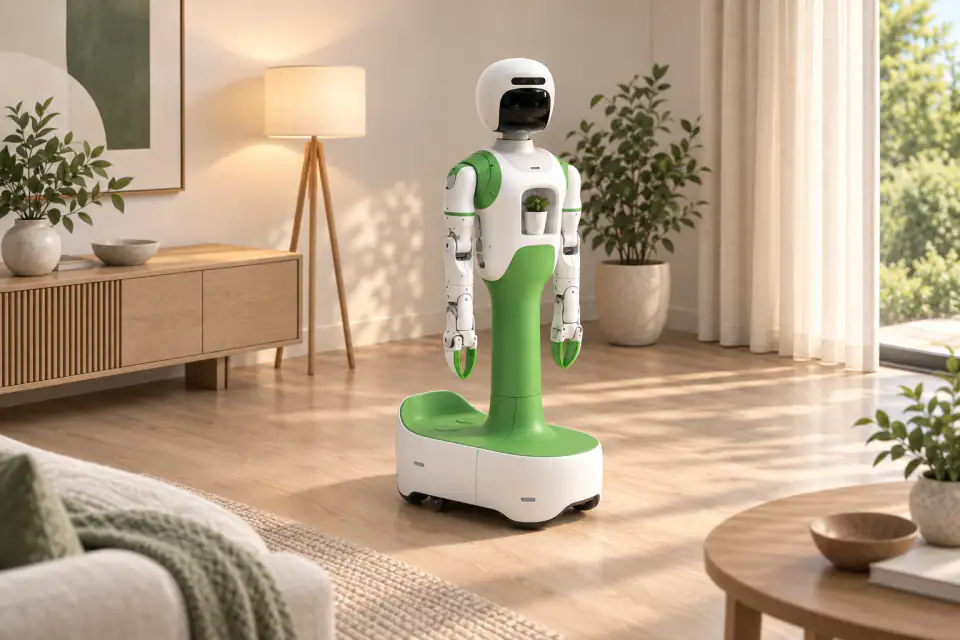
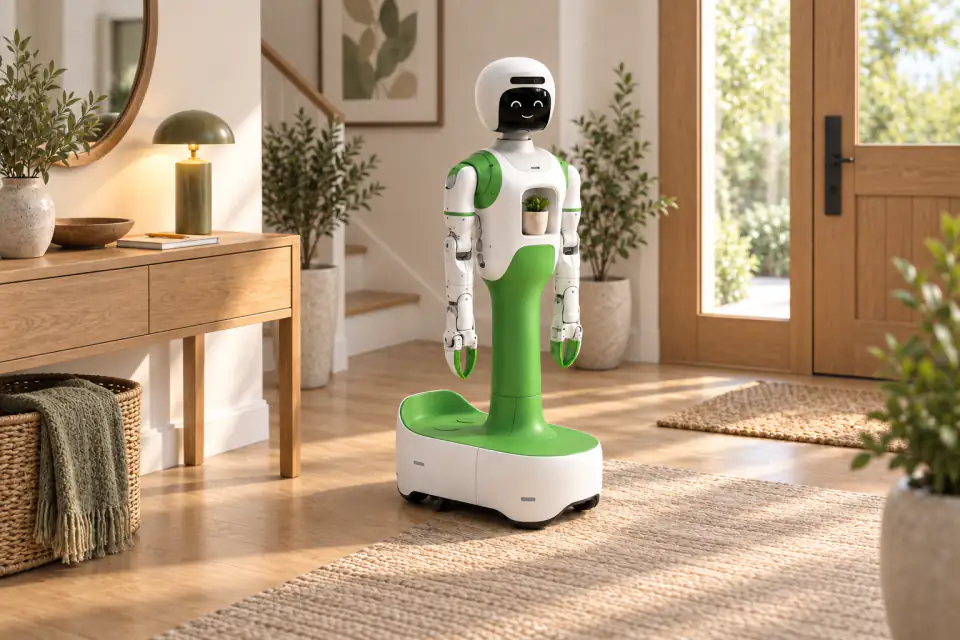
Homebot One’s current main page calls KOKO a physical home robot. It does not publish a formal humanoid classification for the present hardware. A voice, screen, arms, artificial intelligence, or use near people cannot settle that classification by itself; form, locomotion, function, and the terminology used for a named version all matter.
ISO 8373:2021 is the published international vocabulary standard for robotics, while the International Federation of Robotics separately explains service-robot categories. If a formal label matters for research, procurement, insurance, or safety review, record the KOKO version and request the terminology used in its current documentation.
Separate body form from task and autonomy
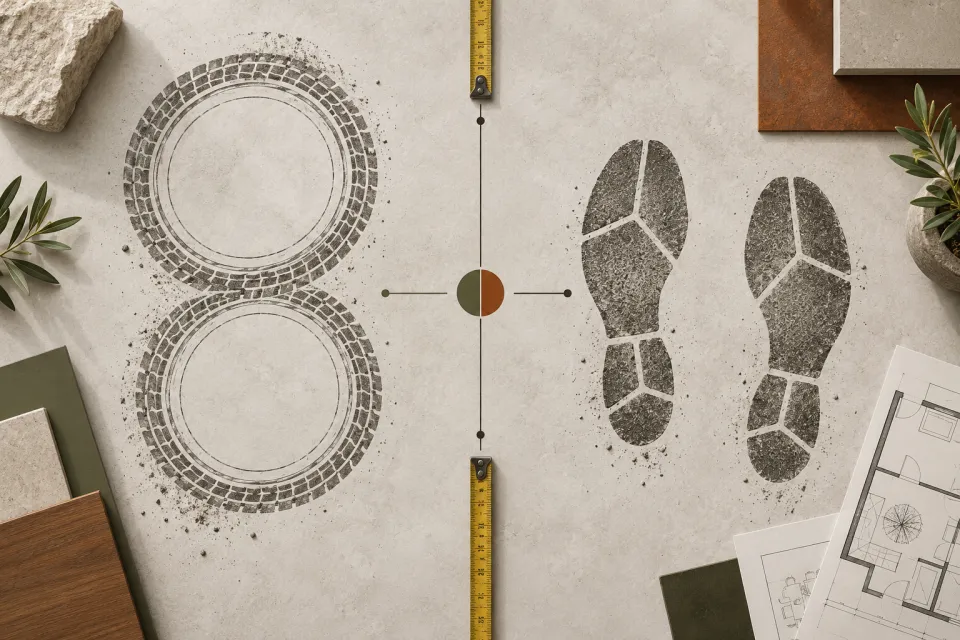
Robot labels answer different questions. Body-form terms describe physical arrangement. Mobility terms describe how a system changes position. Service-robot language describes the useful task context. Autonomy describes how decisions and actions are carried out within defined limits. Combining those dimensions into the single word humanoid hides information that matters during an evaluation.
Instead of asking only whether KOKO is humanoid, ask how the KOKO version under review moves, which parts interact with the environment, what task is being demonstrated, and where people remain responsible. These answers are more useful for doorway clearance, floor transitions, controls, supervision, and recovery than a category word alone.
- Form: what is the physical arrangement of the KOKO version under review?
- Mobility: how does it move, turn, stop, and remain stable in the intended area?
- Function: which bounded task is being evaluated?
- Autonomy: which steps are automatic, supervised, remotely assisted, or manual?
Why search results often blur robot categories
Search results can mix body-form labels with general-purpose ambitions. A human-centered role in a household does not necessarily imply legs, human proportions, or human-equivalent dexterity. Images can also show an earlier prototype or hide the mobility system.
Homebot One’s current page describes KOKO as a home robot and also links historical coverage whose headline called the earlier MyMemo ONE presentation a humanoid robot. Treat those as different source layers: the linked headline documents earlier press wording, while the current first-party description is the better default for the present project. A formal classification still requires version-specific documentation.
Use neutral language in an evaluation
A neutral evaluation record can call KOKO a home robot and then describe the observed build directly. Note its footprint, mobility method, reachable interaction area, control methods, and the surfaces included in the test. If an official document supplies a more specific category, quote it with the version and date rather than turning it into a claim about every KOKO build.
Avoid using humanlike language as evidence of humanlike capability. A friendly name, voice, screen, or social interaction does not establish physical dexterity, judgment, caregiving competence, or broad household autonomy. Evaluate each requested outcome separately and keep a person responsible for decisions outside the demonstrated scope.
- Describe visible and demonstrated properties without guessing internal mechanisms.
- Tie every classification to a source, version, and intended purpose.
- Do not translate social presentation into a claim about judgment or physical ability.
- Ask Homebot One when the distinction affects setup, safety, or program eligibility.
Choose terminology that improves the decision
For a household, the useful questions usually concern room access, noise, controls, privacy, routine fit, charging, and what happens when the system cannot continue. For a research team, repeatability, interfaces, logging, and the formal definition used in a study may matter more. For a developer, the available platform and supported interaction model may define the project.
Use humanoid only when it accurately describes the relevant form and the source supports it. Otherwise, home robot, mobile robot, or service robot may frame the conversation more clearly, with the understanding that even those terms do not prove a particular capability. The evidence still comes from the KOKO version under review, documentation, and observed task.
Frequently asked questions
Is KOKO officially classified as a humanoid robot?
Homebot One’s current site describes KOKO as a physical home robot and does not publish a formal humanoid classification for the present hardware. Historical MyMemo ONE coverage used humanoid in a headline, so cite the source, date, and version when that distinction matters.
Does a robot need legs to be useful in a home?
Usefulness depends on the task, environment, controls, and demonstrated performance. A body form alone does not establish whether a robot is useful for a particular household goal.
Does humanoid mean a robot can do everything a person can do?
No. Humanoid is a form-related term and does not establish broad dexterity, judgment, autonomy, safety, or suitability for a particular task.
What description should I use when asking about KOKO?
Homebot One KOKO home robot is a clear starting description. Then ask about the mobility, interaction method, task boundaries, and required supervision of the specific version under review.
Sources & further reading
From Homebot One, the team building KOKO in Fremont, California.