Begin with distance, choice, and a clear retreat
Sound, movement, size, route, prior experience, health, age, and the individual animal can all shape a pet’s response to unfamiliar equipment. Homebot One’s public KOKO Home page discusses homes with children and pets, but it does not establish universal pet compatibility or publish a pet-interaction protocol for every KOKO version.
The first session should preserve choice and distance rather than seek a close interaction. Keep the pet in a familiar area with a clear retreat and let a responsible adult control the session. Do not lure or confine an animal near the robot for a demonstration. If a veterinarian or qualified behavior professional recommends food as part of a behavior plan, follow that plan rather than improvising one.
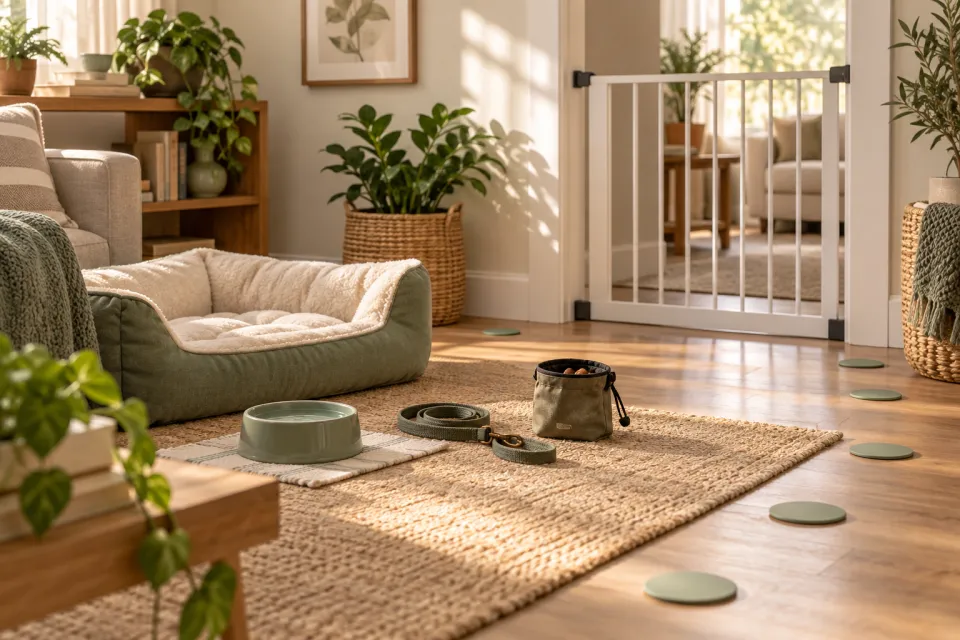
Prepare separate robot and pet zones
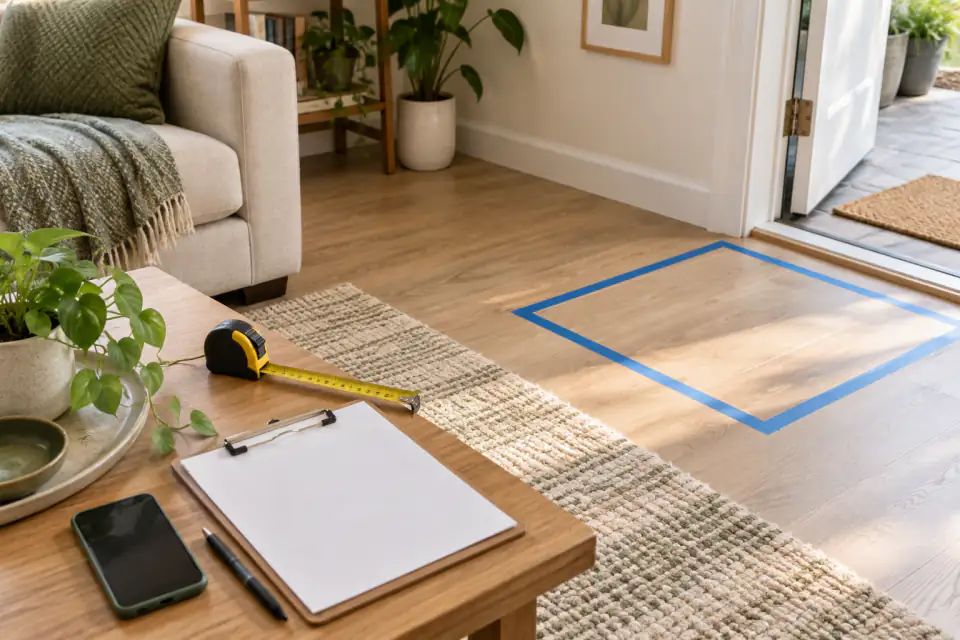
Map the robot route and the pet’s ordinary paths, feeding area, water, bed, litter area, crate, hiding places, and exits. Choose a short robot route that does not block access to those resources. Remove toys, bowls, leads, and loose items from the test path only if doing so does not disrupt the animal’s routine or create a resource conflict.
Set a pet-free home or charging position and confirm how the system should remain secured when not in use. Ask whether fur, pet items, low objects, or sudden movement create maintenance or operating questions for the unit used in the pet-aware session. Do not infer sensor behavior or avoidance capability; request evidence and current instructions.
- Give the pet an open retreat that the robot route never enters.
- Keep food, water, bedding, litter, and favorite resting places outside the route.
- Prevent the robot from blocking a doorway or the pet’s path to a caregiver.
- Assign one adult to the controls and another to observe the animal when possible.
Introduce sound and motion in small steps
Begin with the system stationary and at a substantial distance that fits the setup. Observe without directing the pet toward it. If the household’s plan supports continuing, change only one factor at a time, such as a startup sound or a brief movement in another part of the room, and keep the session easy to end.
Veterinary guidance describes unfamiliar objects and noises as possible fear or anxiety triggers. End the session if the pet hides, withdraws, becomes persistently agitated, acts aggressively, or tries to escape. Restore distance rather than diagnosing the behavior yourself, and consult a veterinarian or qualified behavior professional when welfare concerns remain.
Test household controls without using the pet as an obstacle
Verify pause, stop, route restriction, and recovery procedures with no animal in the test area. Ask what happens when an unexpected moving obstacle enters the route, but do not place the pet there to find out. A controlled prop or Homebot One’s own demonstration protocol can address equipment behavior without creating an avoidable animal encounter.
Agree on house rules before any shared-space session. Rules can cover supervision, closed doors or gates, times when the robot remains inactive, who may start it, and how everyone signals that the session is over. Children and guests should not initiate a pet-robot interaction for entertainment.
- Practice every control before the pet enters the wider space.
- Never use the pet to test detection, stopping, following, or avoidance.
- Keep the session supervised and the operator within the documented control range.
- End the session immediately if the planned separation cannot be maintained.
Decide from repeated calm observations
One quiet observation does not prove long-term compatibility. If the household and its veterinary adviser consider another exposure appropriate, keep the same limited conditions and record distance, sound, motion, route, pet behavior, and why the session ended. Do not increase intensity merely to produce a more impressive result.
Permanent separation, use only when the pet is elsewhere, a narrower route, or no household use are all valid outcomes. The decision should prioritize the animal’s welfare and the household’s ability to maintain the rules.
Frequently asked questions
Is KOKO safe around dogs or cats?
Avoid assuming general pet safety or compatibility. Check with Homebot One about the unit used in the pet-aware session, prepare separation and controls, and evaluate the individual animal’s response in a calm, supervised process.
Should my pet meet KOKO during the first setup?
The cautious approach is to keep the pet securely separated during setup and control checks. Introduce only the level of sound or motion supported by the plan, with distance and an open retreat.
Can I test whether KOKO avoids my pet?
Do not place an animal in the route to test detection or avoidance. Request supporting evidence from Homebot One and use an approved nonliving test method only if the team recommends one.
What if my pet seems uncomfortable?
Stop the session, restore distance and the normal environment, and do not force another interaction. Consult the animal’s veterinarian or a qualified behavior professional if you have welfare concerns.
Sources & further reading
From Homebot One, the team building KOKO in Fremont, California.