Treat energy as a measured ownership cost
Electricity is usually only one part of a home robot budget, but it should still be based on evidence. The official Homebot One pages reviewed for this guide do not publish KOKO wattage, battery capacity, charging efficiency, or annual energy use. Do not substitute the specification of another robot, computer, or appliance. Request current technical information for the configuration being evaluated.
Begin with the intended routine and schedule. A robot used briefly in a supervised pilot will have a different energy pattern from one available throughout the day. Include the robot, charger or dock, external power supplies, network equipment added for the project, and any always-on accessory. Mark which loads already exist so they are not counted twice. If specifications become available later, compare them with observed wall measurements and investigate material differences instead of selecting the lower number.
Separate active, charging, idle, and standby modes
Department of Energy guidance explains that devices can consume electricity while appearing off and describes standby measurement under IEC 62301. For a robot evaluation, define each observed mode: active operation, charging, fully charged on the dock, idle away from the dock, powered down, and any maintenance or update state. Record how the mode was entered and how long it lasted.
Use a suitable power meter at the wall only when the equipment instructions and site rules permit it. Measure over enough time to capture cycling rather than relying on one instant reading. For battery operation, wall energy during a complete recharge can be more useful than guessing from battery labels. Do not open equipment or bypass safety protections to obtain a measurement. Keep the meter and its instructions outside walking routes, and have a qualified person review any setup that exceeds ordinary plug-in measurement.
- Active routine energy
- Charging energy and charging duration
- Fully charged dock or charger standby
- Robot idle or sleep energy
- Added network, display, sensor, or accessory energy
Build a transparent annual estimate
For each mode, multiply measured kilowatts by expected hours, then add the modes and apply the relevant electricity rate. If rates vary by time, place charging in the expected rate period. Show the assumed number of routines, charging sessions, idle hours, and days of operation. Keep taxes or demand charges separate when they apply to an organizational site.
Create low, expected, and high cases because a pilot schedule rarely predicts mature use perfectly. The low case might reflect limited adoption; the high case may include longer availability, more frequent charging, and added accessories. Report the range and the date of the local utility rate. This makes the estimate easy to update without presenting it as an official Homebot One claim. For transparency, retain the raw readings and calculation sheet rather than reporting only the resulting annual dollar figure.
Include placement, availability, and battery questions
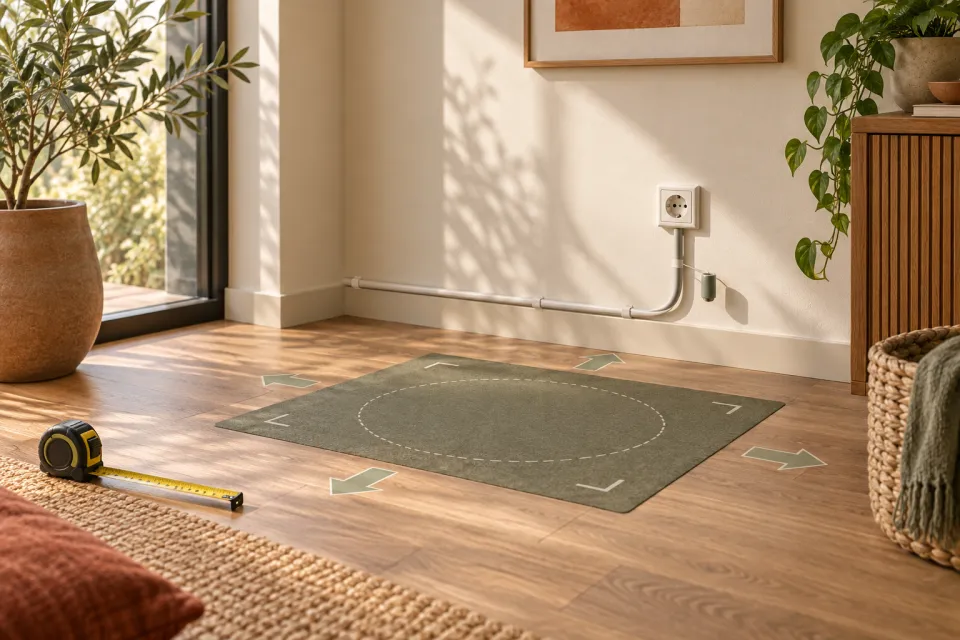
Charging value is not only the utility bill. Ask how much floor and outlet access the charging area needs, whether the route stays clear, how users see charging state, what happens after a power interruption, and whether the robot can complete the intended schedule. Room changes, extension cords, heat sources, moisture, children, pets, and mobility paths can affect placement decisions.
Ask Homebot One about applicable electrical, battery, storage, and charging instructions for the current configuration. Confirm whether installation or dedicated equipment is required and who may service it. Avoid making certification claims unless documentary evidence identifies the exact product and standard. A safe, reliable charging routine can matter more to value than a small difference in annual electricity. Include enough clearance for safe access and emergency disconnection, following the instructions supplied for the evaluated hardware.
Put energy in perspective with total value
Federal acquisition guidance defines life-cycle cost as acquiring, operating, supporting, and, when applicable, disposing of an item. Once energy is measured, compare its scale with software, support, human time, repairs, and downtime. Do not spend hours optimizing a small load while leaving a larger unquoted obligation unresolved.
Use energy per useful routine as an optional operational measure, alongside cost per useful routine and completion rate. A lower-energy attempt has little value if it does not achieve the intended outcome, while a useful routine still needs acceptable safety, privacy, and support. The price is right only when the full verified value justifies the full resource use. The same measurements can inform scheduling and capacity planning even when electricity cost is a small share of total ownership.
Frequently asked questions
How much electricity does KOKO use?
The official pages reviewed for this guide do not publish power or annual-energy specifications. Request current data or measure the evaluated configuration using an appropriate method.
Should charger standby power be included?
Yes. DOE notes that plugged-in equipment can consume standby power. Measure the actual charger or dock state rather than assuming it is zero.
Can I estimate KOKO energy from another home robot?
That would not support a decision-grade KOKO estimate. Hardware, software, duty cycle, charger design, accessories, and room conditions can differ.
Should accessory and network power be included in a KOKO energy estimate?
Include electricity used by equipment added specifically for the evaluated deployment, but do not count an existing household or organizational load twice. Keep each measured component visible in the calculation.
Sources & further reading
From Homebot One, the team building KOKO in Fremont, California.