Every ranking position belongs to a dated snapshot
Home robot rankings can change because products, companies, public evidence, availability, and editorial assessments change. Humanoid Home News described its September 2026 leaderboard as a snapshot in a fast-developing market. It reported three new entrants while seven companies or robots retained positions in the Top 10.
A later list should be treated as a new dated observation, not as a correction that erases September. Historical positions remain useful for understanding when a project entered the conversation and how the publisher’s view evolved. Current positions answer a different question: what does the publication list now?
New public evidence can alter an editor’s assessment
A named model, public demonstration, pilot, release plan, price, or access program can provide information absent in an earlier month. The reverse is also true: a missed timeline, changed program, or lack of current evidence may affect how an editor sees relevance or maturity. The effect depends on the publication’s method.
Because Humanoid Home News considers several factors, movement cannot automatically be assigned to one event. Unless the publisher explains a change, avoid writing that a rank rose because of one feature or fell because of a failure. Correlation between a news item and a new position is not a disclosed scoring reason.
Category boundaries can move too
The home-robot category includes projects at different stages and with different physical forms. A publication may refine which robots are sufficiently home-focused, add a newly announced effort, or give more weight to access and household use. Those choices can rearrange a list even when an existing product has not changed.
That is why methodology belongs next to the numbers. A reader should know the market, date, category, and factors before comparing two editions. A No. 9 position in one curated U.S. home list cannot be directly compared with No. 9 in a global sales chart or a laboratory benchmark.
Moving down is not the same as failing
A position can fall when another entry rises or a new one arrives. Humanoid Home News noted that projects moving below the September cutoff remained on its broader leaderboard and were still worth watching. Ordinal lists are relative: one change affects the neighbors even when their own evidence stays constant.
Likewise, moving up is not proof of a breakthrough or new capability. Check whether the publication explained the shift, then verify any product claim through primary sources. Avoid using ranking movement as a proxy for safety, sales, customer satisfaction, or engineering progress.
- A new entrant can move existing entries without a product failure.
- A higher position does not automatically prove a new capability.
- Different lists may use different markets and criteria.
- Historical positions should retain their original dates.
Keep a simple ranking change log
For each edition, save the source URL, publication date, stated methodology, position, and any explanation the publisher gives. Add a separate column for official product developments, with their own primary-source links. This prevents an editor’s view and a company announcement from being blended into one unsupported narrative.
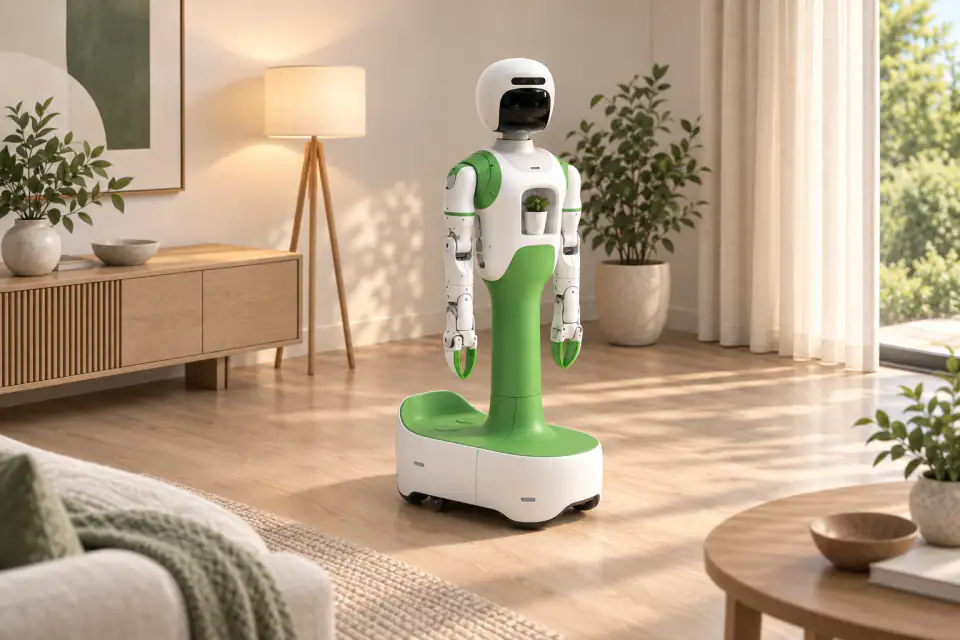
For KOKO, the September record is entry at No. 9. If a later position matters, cite that edition separately and avoid saying the robot became better or worse unless matching evidence supports the claim. A disciplined change log turns volatile search results into a transparent history.
Frequently asked questions
Why can a home robot move in a monthly ranking?
New entrants, new public evidence, access changes, category judgments, and editorial reassessment can all affect a relative list.
Does a lower rank mean a robot failed?
No. Another entry may have moved ahead, and the publisher may have changed its relative assessment. Look for an explicit explanation before assigning a cause.
Does a higher rank prove better performance?
No. A curated ranking may consider many factors and is not automatically a standardized performance benchmark.
How should I cite a historical position?
Include the publisher, edition date, market, and position, and use a separate citation for any later list or product development.
Sources & further reading
From Homebot One, the team building KOKO in Fremont, California.