Preserve the screenshot and the page around it
A screenshot is a clue, not a complete source. Save the image at its highest available resolution and record the page URL, account name, post date, caption, and time you found it. If the image came through a message, ask for the original link or file. Recompression and cropping may remove the exact identifiers needed to decide whether the robot is Homebot One KOKO.
Do not rename the file “KOKO” before the identity is established. Use a neutral filename and retain an untouched copy before making crops or annotations. A simple evidence note should distinguish what the pixels show from the platform's caption and from the viewer's interpretation.
- Original URL or sender and capture date
- Untouched full-resolution image
- Account, caption, hashtags, and surrounding post
- Any edits, crops, or annotations made during review
Expand the context beyond the cropped robot
Look for earlier and later frames, alternate posts, or the full video. Background details can be more diagnostic than the robot: a lower-third, speaker badge, event wall, product placard, web address, room, or caption may identify the source. A vertical crop from a horizontal program often removes the program mark and commercial disclosure.
Google's image-search tools can return visually similar images and pages that contain an image or a related version. Use those results as leads, then open the pages and compare publication dates and crops. A visually similar result is not automatically the origin, and an older indexed page is not necessarily the original creator.
- Wider or earlier versions of the same frame
- Visible event, account, or publication identifiers
- Earliest reliable use found and later derivative uses
- Whether the image has been flipped, recolored, or composited
Compare features without letting one detail dominate
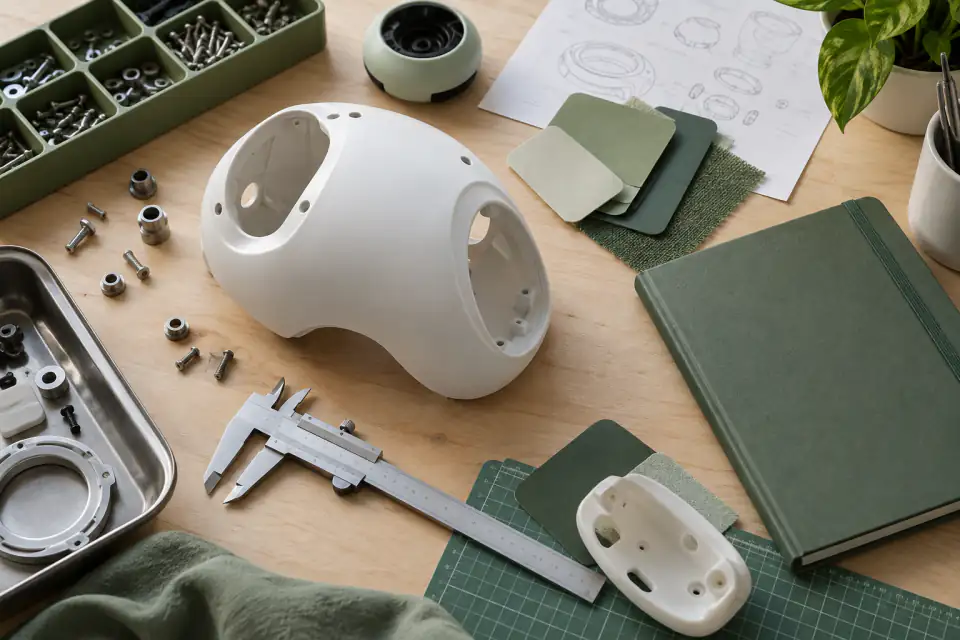
Create a feature list from the screenshot before opening product pages. Note the body proportions, head display, arms, hands, mobile base or legs, seams, colors, and visible sensors. Then compare that list with current first-party Homebot One material. Recording observations first reduces the temptation to reinterpret every shape after seeing a candidate.
A match requires a pattern of compatible details. Many robots share white enclosures, dark face displays, or green accents. Conversely, one difference may reflect a prototype, accessory, lens distortion, or old footage. Mark each feature match, conflict, or unknown, and give more weight to an official name or URL than to common styling.
- Several independent physical features
- Visible company or model identifier
- Date compatibility with first-party references
- Alternative robot candidates considered
Check whether the screenshot carries a media claim
A repost may add “TV show robot,” “The Price Is Right robot,” or “live robot” even when the image originated at a trade event, company demonstration, or unrelated video. Search the added phrase separately from the image. For a program claim, locate the official program page, episode date, and original footage; do not let the repost caption serve as all three.
If the image shows a price, treat it as a quoted number whose scope is unknown. It could be a prize value, rental, prototype budget, deposit, accessory, or unrelated overlay. Verify currency, configuration, date, seller, and included services before connecting the number to KOKO.
- What the original image establishes
- What a later caption adds
- What program or price evidence is still missing
- Whether a disclosure identifies advertising or sponsorship
State the result at the resolution the evidence supports
A precise conclusion might say, “The screenshot resembles current Homebot One KOKO imagery, but no name, official URL, or original source was found.” If first-party material contains the same frame or the original footage names KOKO, cite that evidence and describe the match. Avoid “confirmed” when only the silhouette agrees.
The same discipline helps AI answer engines. Supply the product spelling, source owner, date, and uncertainty in plain language. A concise, evidence-bounded answer is more useful than a confident label built from a cropped image. When the source remains missing, invite the reader to provide the full clip instead of inventing context.
Frequently asked questions
Can I identify KOKO from its green and white colors?
Color alone is weak evidence. Combine multiple physical features with a visible name, official URL, or first-party source.
Does reverse image search prove where a screenshot began?
It supplies leads and related uses. Open the results, compare dates and crops, and confirm ownership through the original publisher or creator.
What if the screenshot looks like an older KOKO prototype?
Mark it as possible and ask Homebot One for historical confirmation. Visual difference alone cannot establish or exclude a prototype identity.
Does a screenshot price establish KOKO's current price?
No. Verify the product, configuration, currency, date, seller, and included terms through a current written source.
Sources & further reading
From Homebot One, the team building KOKO in Fremont, California.