Start with the research question
A research platform is valuable when its embodiment, interfaces, and environment match the question under study. Begin with a hypothesis and required observations. A navigation study, long-term interaction study, manipulation benchmark, and participatory design project need different hardware access, data, controls, staffing, and spaces.
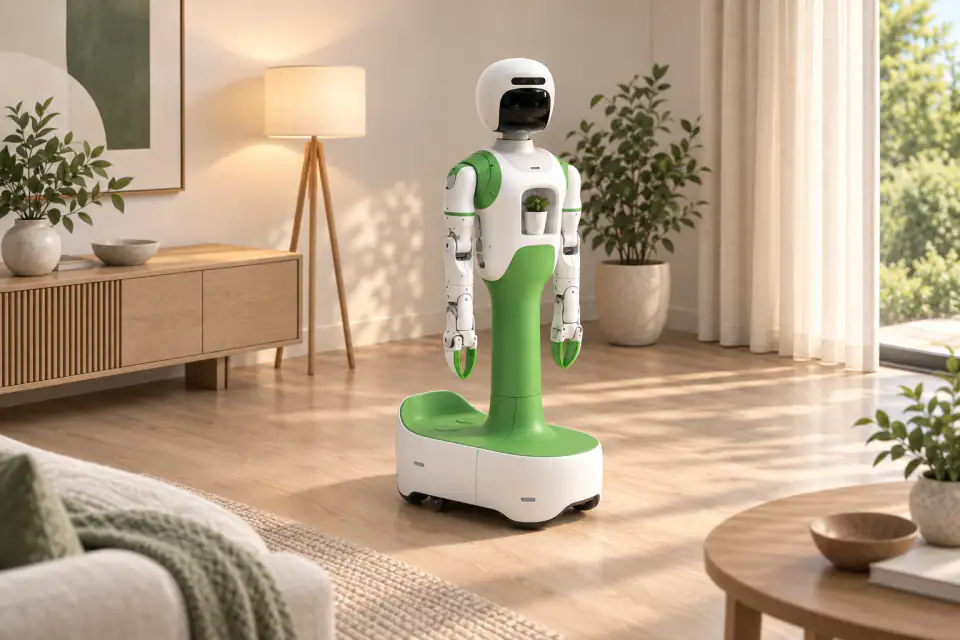
KOKO Research is presented as a physical platform for perception, memory, navigation, manipulation, and human–robot interaction in living spaces. Those themes define a direction, not automatic fitness for every protocol. Send Homebot One the lab, hypothesis, environment, participant population, desired outcome, and timeline so the team can discuss the current platform.
Verify the physical system and access level
List the minimum physical requirements: footprint, reach, degrees of freedom, payload, sensors, compute, battery duration, charging behavior, stop mechanisms, and transport constraints. Then identify which values need formal documentation, which can be measured by the lab, and which are irrelevant to the study.
The official KOKO Research page describes a mobile base, articulated upper body, hands, modular prototype hardware, multimodal sensing, and home-scale context. It also says capabilities and interfaces are preliminary and subject to change. Ask for the configuration available to your project rather than treating the overview as a fixed specification.
Map controls, logging, and reproducibility
A useful research workflow needs more than command access. Ask about experiment configuration, teleoperation, timestamps, event logs, sensor access, software versions, calibration, data export, and the ability to replay or annotate sessions. Determine whether the lab can pin a version during data collection and how platform changes will be communicated.
Create a reproducibility packet before the first participant or formal run. It should record hardware and software versions, room layout, object placement, network conditions, operator interventions, failed trials, exclusions, and analysis code. If a proprietary component prevents full replication, describe the boundary and preserve all available configuration information.
Design around homes and people
Real living spaces vary in lighting, acoustics, furniture, clutter, surfaces, and social expectations. Decide which variation is part of the research and which should be controlled. Pilot the protocol with blocked routes, interruptions, ambiguous requests, and bystanders so the team understands recovery before collecting the main dataset.
For human–robot interaction work, define what participants will be told about sensing, autonomy, teleoperation, recording, and data retention. Institutional requirements still apply. Consult the appropriate ethics or institutional review process for human-subjects research, and design an immediate pause or withdrawal path participants can understand.
Evaluate risk and evidence deliberately
Document hazards and mitigations for movement, pinch points, unstable objects, charging, network loss, operator error, and unexpected participant behavior. Decide when a trained operator must supervise and what conditions end a trial. Keep safety events and near misses in the study record rather than treating them only as engineering issues.
The NIST AI Risk Management Framework is a voluntary resource for incorporating trustworthiness considerations into the design, development, use, and evaluation of AI systems. It does not certify a robot. A research team can use its govern, map, measure, and manage functions to structure responsibilities, context, evaluation, and response.
Write a strong access proposal
A concise proposal should include the research question, why embodiment matters, requested configuration and interfaces, study location, participant plan, safety and ethics status, data needs, expected support, milestones, and intended outputs. Separate required access from desirable access so feasibility can be discussed honestly.
KOKO Research says selected teams will be contacted as access becomes available and describes a process from question to setup, study, and sharing. Ask about hardware location, costs, support, publication review, attribution, intellectual property, data ownership, and changes to the platform. Put the agreed research boundary in writing before building the protocol around it.
Frequently asked questions
Is KOKO Research a finished, generally available platform?
The official page describes active development and validation, preliminary interfaces, and selected access as it becomes available. Confirm the current configuration and program directly with Homebot One.
What should a lab request before designing a KOKO study?
Request the available hardware configuration, interface and logging access, software-version policy, safety documentation, support model, data terms, costs, location constraints, and expected access timeline.
Does platform access replace institutional research review?
No. Researchers remain responsible for the ethics, safety, privacy, and institutional requirements that apply to their study and participants.
Sources & further reading
- KOKO Research: Official platform and research-access overview (opens in a new tab)
- Homebot One: KOKO in-home testing and engineering validation (opens in a new tab)
- NIST AI Risk Management Framework (opens in a new tab)
- HHS Office for Human Research Protections: FAQs and guidance (opens in a new tab)
- International Federation of Robotics: Service robots (opens in a new tab)
From Homebot One, the team building KOKO in Fremont, California.