Begin with the older adult’s priorities
Aging in place means living in one’s own home as one grows older. The National Institute on Aging recommends planning ahead and considering support, safety, accessibility, community resources, and changing needs. A robot is one possible tool within that larger plan; it should begin with the person’s goals rather than a family member’s enthusiasm for technology.
Ask the person who would live with the robot: What part of the day would you like to feel easier? Which routines do you want to keep exactly as they are? When would you welcome a reminder or conversation? When do you want quiet and privacy? Who may receive information? A useful evaluation respects “no” as much as “yes.”
Fix the environment before asking technology to compensate
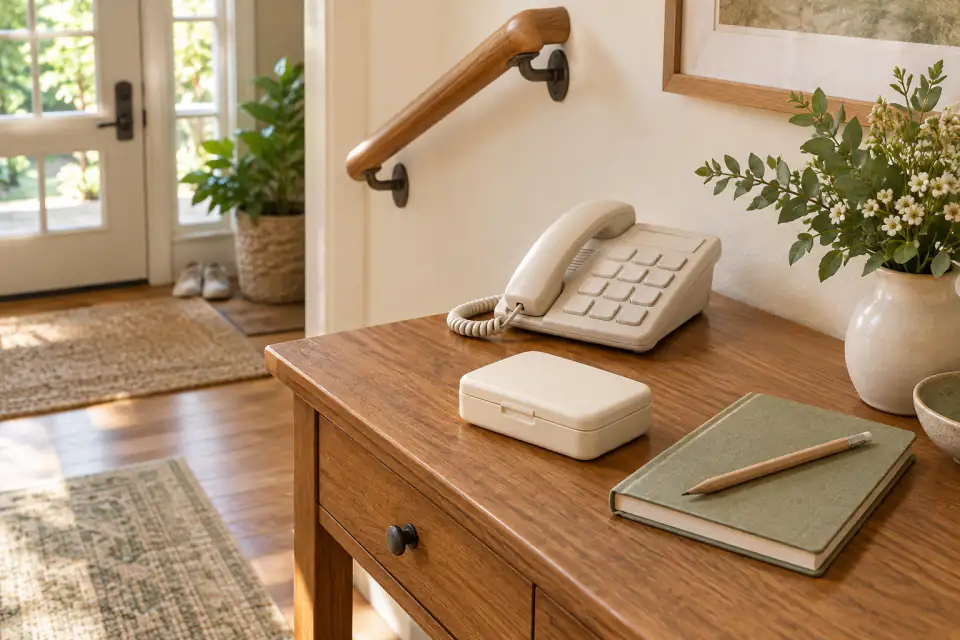
Walk through the home room by room. NIA highlights practical measures such as better lighting, secure floor coverings, grab bars, handrails, and reducing slip or trip hazards. Address immediate physical hazards with qualified help. A robot should not be used as a substitute for a needed railing, accessible route, professional assessment, or emergency plan.
Then inspect the environment for robot use: floor transitions, narrow passages, stairs, cords, pets, charging location, network coverage, and places where privacy is especially important. Ask which conditions the current robot has tested and what the household must change. If setup makes the home harder for the resident to navigate, the proposed benefit deserves another look.
Define one supportive experience
Choose a modest scenario such as bringing up familiar music, making a family connection easier, or supporting a nonmedical routine. Describe what success looks like and what human help remains. Avoid broad labels such as “companionship” or “monitoring” until everyone agrees on the actual interaction, timing, data, and limits.
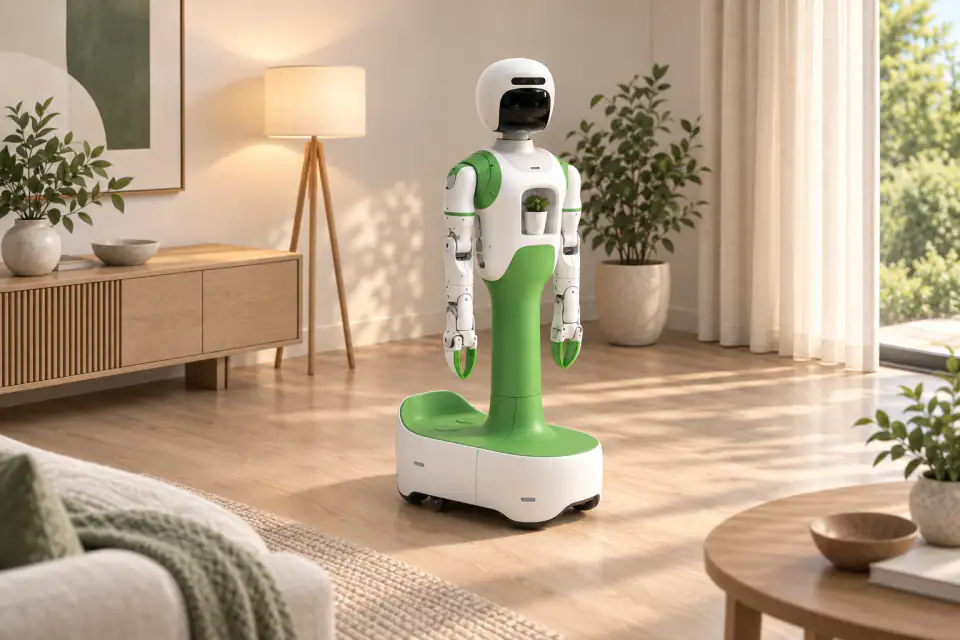
KOKO Care’s official page discusses conversation, reminders, familiar media, and family connection as development areas. It also says features are being introduced progressively through testing. Ask the team to identify what the current pilot or demonstration can do, what requires supervision, and what remains a design goal.
Make consent visible and revisable
Consent is an ongoing household practice, not a checkbox completed during setup. Ask how the resident knows when cameras, microphones, mapping, or sharing are active. Can they pause the robot immediately? Can they change who receives updates? Are guests informed? Can a family member override preferences, and under what authority?
KOKO Care states that its design direction emphasizes consent, clarity, personal control, understandable sensing, permission before sharing, and easy privacy modes. Those are stated goals. During evaluation, ask to see the controls in the current version and let the older adult operate them without coaching.
Keep care and emergency roles clear
Write down who remains responsible for medication, personal care, transportation, home maintenance, clinical decisions, and emergencies. If a robot offers a reminder, decide who notices when the reminder is missed. If it helps start a call, decide what happens when no one answers. Technology should fit into a human support plan with named responsibilities.
Homebot One explicitly says KOKO Care is not a medical device and does not replace professional care, emergency services, or human judgment. Do not present a demonstration as proof of fall detection, diagnosis, emergency dispatch, or clinical benefit unless the applicable product has documented evidence and authorization for that purpose.
Run a small, reversible pilot
A pilot should have a start date, end date, one or two outcomes, a way to report discomfort, and a stop rule. Track whether the experience is used voluntarily, whether it reduces or adds work, and whether household members understand its status. Include unsuccessful interactions; they often reveal the most important design needs.
Review the pilot with the older adult first, then family or care partners. Ask what felt helpful, intrusive, confusing, or unnecessary. Revisit the decision as needs change, which is consistent with NIA’s advice to plan ahead and reevaluate support. The right outcome may be continued testing, a narrower use, a pause, or choosing a different kind of support.
Frequently asked questions
Can a home robot replace a caregiver?
No general home-robot category can be assumed to replace human care. KOKO Care specifically states that it does not replace family, caregivers, professional care, emergency services, or human judgment.
Is KOKO Care a medical device?
Homebot One’s official KOKO Care page states that KOKO Care is not a medical device. Discuss medical or safety needs with appropriate professionals.
Who should approve an aging-in-place robot pilot?
The person who would live with the robot should be central to the decision and able to pause or decline participation. Families, caregivers, organizations, and professionals may also have defined roles depending on the setting.
Sources & further reading
- National Institute on Aging: Aging in Place—Growing Older at Home (opens in a new tab)
- National Institute on Aging: Home Safety Tips for Older Adults (opens in a new tab)
- KOKO Care: Official development, privacy, and pilot information (opens in a new tab)
- NIST IR 8425: Consumer IoT cybersecurity baseline (opens in a new tab)
From Homebot One, the team building KOKO in Fremont, California.